Bowed Strings or Plucked Strings: Two Different Kinds of Musical Continuity
Bowed strings or plucked strings create musical continuity in different ways; learn to hear sustained tone, shaped silence, and the gestures linking notes.
Bowed strings or plucked strings can make the same short melody feel like an unbroken line or a chain of distinct gestures. The difference is audible in what happens between notes: a bow can keep sounding as a player changes pitch, while a pluck begins with an attack and then fades. Neither approach is more expressive by nature. Each asks listeners to notice a different kind of connection.
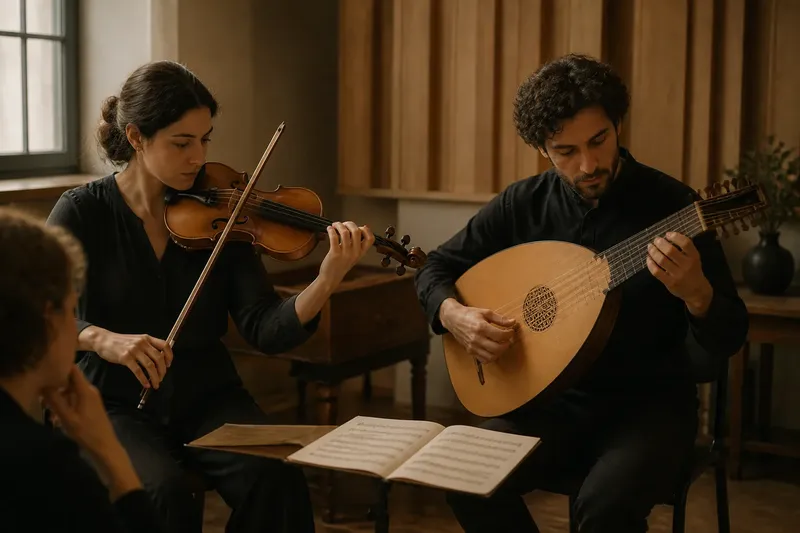
Imagine a hypothetical rehearsal in a small concert room. A composer has written a four-note phrase for a local string ensemble, and the players are deciding how to shape it. The group includes a bowed fiddle and a plucked lute. The notes and their order stay the same, but the players try the phrase on each instrument, listening for what carries its identity when the sound changes.
One phrase, two gestures
The phrase begins on a held note, moves upward, turns back, and settles on its starting pitch. On the fiddle, the player draws a bow across the string, changes finger positions, and maintains contact with the string. The sound can continue through those pitch changes. A listener may hear one line bending and traveling, rather than several separate notes.
On the lute, the player plucks each note with a finger or plectrum. Each attack gives the sound a clear beginning, followed by a natural decay. The melody still connects through its contour and timing, but silence or fading sound separates one event from the next. The player can make those gaps feel deliberate rather than empty.
In the invented rehearsal, the fiddle player first connects the four notes with a smooth bow. The lute player answers with clean, evenly spaced plucks. The phrase is recognizable in both versions, yet the sense of motion differs: one seems to pass continuously through changing pitches; the other seems to proceed by carefully placed arrivals.
How a bow carries sound
A bowed string instrument sustains tone through continuing friction between bow hair and string. The player can alter pressure, speed, and contact point, shaping the sound while it is underway. A note might grow, soften, or change color before the next pitch arrives. That capacity gives the melody a flexible, vocal quality, though the result depends on the instrument, technique, and musical tradition.
Continuity does not require every note to be joined without a break. A bow can articulate separate notes with small changes in direction or a brief release of pressure. Conversely, a player can connect notes across a shift in pitch, using bow control to make the transition feel fluid. The bow is not simply a device for making long notes; it offers choices about how each note meets the next.
For the hypothetical phrase, the fiddle player tries a second version: a slight emphasis on the first note, a gentle easing through the middle, and a firmer arrival at the end. The melody still flows, but its shape becomes easier to follow. Sustained sound gives the performer room to make changes inside a note, not only at its beginning.
How a pluck shapes silence
A plucked string makes its strongest statement at the instant of attack. After that, the vibration fades according to the instrument, string, playing technique, and room. The player cannot maintain the same string’s sound indefinitely with a bow-like motion, but can influence the note’s character through where and how it is plucked, how firmly it is touched, and whether another sound overlaps it.
That decay is part of the music, not a flaw that needs covering. A quick pluck can make a note crisp and pointed; a gentler one can leave a softer impression. The natural space after a note may clarify rhythm, give a phrase a sense of breath, or let another instrument enter without competing with a continuous tone.
In the rehearsal, the lute player first leaves a distinct pause between the four notes. Then the player allows each note to ring into the next, without losing the separate attacks. The second version sounds connected too, but by overlap, resonance, and timing rather than by a continuous source of energy. The player discovers that silence can be shaped as carefully as tone.
What changes the connection?
The instrument is only one part of the decision. Musical tradition, room acoustics, ensemble texture, and a performer’s technique all affect how a line feels. A plucked instrument may use repeated notes, ornaments, or overlapping resonance to suggest continuity. A bowed instrument may use sharply detached strokes to make each pitch feel independent. Listen for the musical result, rather than assuming an instrument always behaves one way.
In an ensemble, the roles can complement each other. A bowed line might sustain a melody while plucked strings mark its rhythm. In another passage, the plucked instrument may carry the tune, with bowed tones providing a sustained background. These are possibilities, not fixed rules: local practices and the score or oral tradition determine what fits.
The room also matters. In a resonant hall, the fading notes of a lute may linger and overlap, softening the gaps between plucks. In a dry room, a bowed phrase may sound more exposed, making changes of bow and finger position easier to hear. A listener can compare the impression of a phrase across settings without treating one room as the correct one.
Questions listeners ask?
Can plucked strings sustain a melody?
Yes. A plucked instrument can sustain a sense of melody through overlapping resonance, repeated notes, ornament, and rhythmic phrasing. Its tone may fade between attacks, but the musical line can still feel coherent.
Can bowed strings sound sharply separated?
Yes. A bow can start and stop notes distinctly, or give them crisp accents. Sustained capability does not mean every bowed melody must be smooth or continuous.
Which sound is easier to follow?
That depends on what you are listening for and how the phrase is played. A sustained line may make pitch movement easy to trace, while clear plucked attacks can make rhythm and note boundaries stand out.
Do regional traditions use these techniques differently?
They can. Instrument design, repertoire, ensemble practice, and local teaching all shape how performers use bowing or plucking. The instrument’s broad sound offers a starting point, not a complete account of a tradition.
What the rehearsal reveals
By the end of the invented rehearsal, the players have not chosen a winner. They have found two ways to preserve the same phrase: the fiddle connects changing pitches through sustained bow contact, while the lute connects distinct attacks through contour, timing, and resonance. Their shared melody becomes a useful reminder that musical continuity is not the same as an uninterrupted sound.
For a listener, a simple approach is to follow one transition: notice when a note stops, whether the next attack overlaps its decay, and how the phrase’s direction carries across the gap. There is no need to identify every technique or instrument before listening. If the contrast is hard to hear, focus on a single repeated note or the point where the melody turns. Bowed strings or plucked strings can both make a line feel connected; attending to the connection itself reveals how differently that feeling can be made.
In the hypothetical ensemble, the players keep both versions in the arrangement. The bow gives the phrase a continuous thread, and the plucks give its turns clear edges. That choice lets the melody hold two kinds of memory at once: the sound that remains, and the gesture that has just passed.