The East-West Label Does Not Explain a Musical Tradition
An East-West label can blur the musical tradition you mean. Learn to name its place, community, setting, and musical context with greater precision.

An East-West label can obscure the very tradition a concert program hopes to describe. To name an East-West musical tradition more precisely, begin with the specific place, community, and setting—not a broad map division that bundles distinct histories together.
That change is small but useful. “Eastern music” might refer to concert repertories from regions separated by language, religion, migration, and performance practice. A listener needs a more exact name to understand what is being heard and why it belongs in a particular program.
Start with the place
Geography is a good first clue, but a continent or compass direction is rarely enough. Name the country, region, city, or cultural area that the available program notes support. If the music belongs to a community whose territory crosses modern borders, say so rather than forcing it into one national box.
Place names can point to different things: where a piece was composed, where a tradition developed, where performers learned it, or where a performance is taking place now. These are not interchangeable. “Music of a region” may describe a broad lineage; “music performed in a city” may describe a current scene.
For instance, a program might identify a repertory as associated with a particular region while noting that the featured composer worked elsewhere. That distinction helps listeners understand the relationship without implying that the composer’s birthplace, artistic identity, and musical sources all match.
Name the tradition
When a tradition has a recognized local name, use it if the spelling and meaning are clear. Keep the wording understandable for readers who are encountering it for the first time. A short explanation can identify whether the term refers to a repertory, a performance lineage, a genre, or a broader cultural practice.
Tradition is not a synonym for “old.” It can include material passed through teaching, family or community practice, institutions, written notation, and contemporary composition. Some musicians preserve inherited conventions; others adapt them, combine them with new approaches, or question how the label is being used.
A precise description leaves room for that range. Instead of treating a tradition as a sealed object, identify the feature relevant to the concert: a mode of training, a repertory, a performance convention, or a relationship between instruments and voices. Avoid claiming that one description covers every performer or community.
Separate music and context
A musical sound and its social setting belong in the same account, but one should not stand in for the other. A scale, instrument, or vocal style does not by itself explain a community’s history. Nor does a political or religious label tell a listener how a piece is structured or performed.
Choose context that directly clarifies the program. A brief note might explain that a repertory is heard in a particular ceremonial setting, taught through a named institution, or presented today in concert halls as well as community gatherings. If the connection is uncertain or varies across communities, describe that variation plainly.
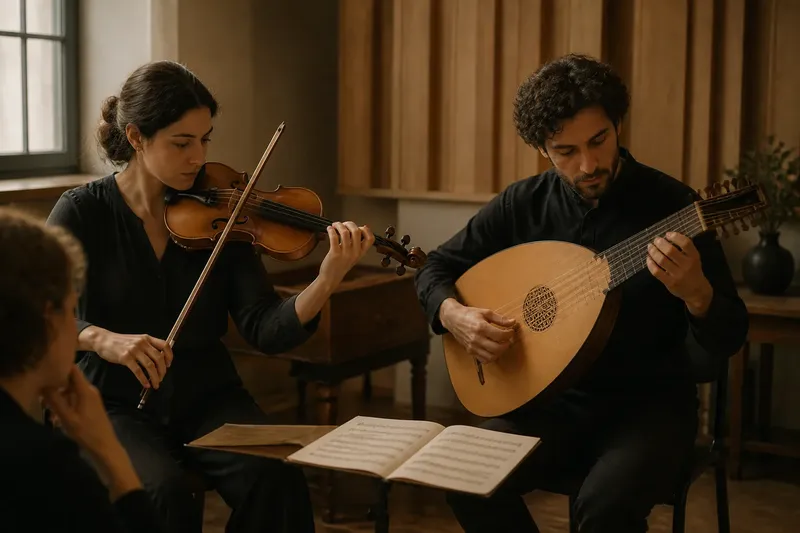
Imagine a program featuring a bowed instrument and a contemporary composition drawing on a regional performance practice. The notes could name the region, identify the practice, and explain which feature the composer adapted. The audience would then know what the connection is without being asked to treat the composition as a complete portrait of that region.
Questions about labels?
Why can “Eastern music” be misleading?
The phrase groups together traditions that may have little in common beyond a broad position on a map. It can make one region seem culturally uniform and conceal the specific people, institutions, languages, and repertories under discussion.
Should I use a country or community name?
Use the name that most accurately describes the tradition and the information you can support. A community name may be more appropriate than a country label, especially when a tradition crosses borders or belongs to a group with its own distinct identity.
How should a concert describe a blended work?
Name the traditions or practices that are relevant, then state what the composer or performers do with them. Avoid suggesting that a blended work represents either source tradition in full; a specific account of the musical choices is more informative.
Use careful language
Broad labels can still have a place as orientation, especially when a concert spans several regions. Treat them as signposts, not explanations. Follow them with names that locate the music more closely and distinguish neighboring traditions where that matters.
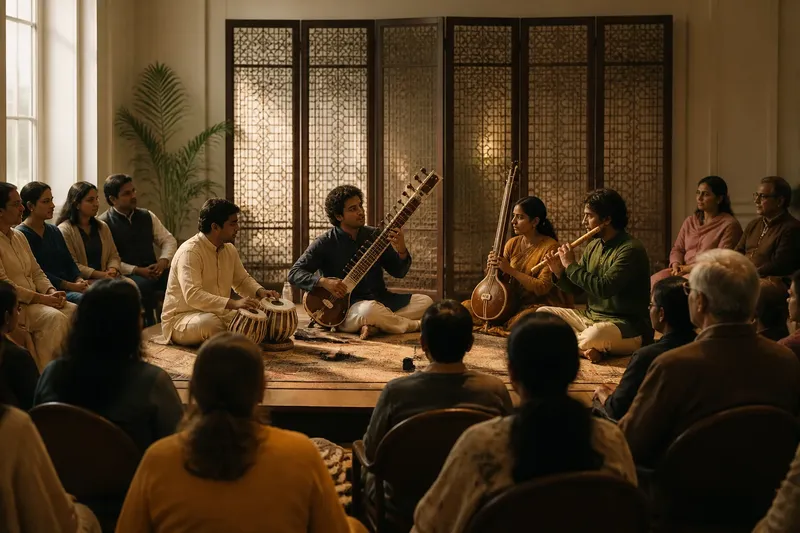
Watch for descriptions that turn a large region into a personality: “mystical,” “exotic,” or “ancient” can sound vivid while explaining little. Replace them with observable details. Mention the instruments named in the program, the ensemble arrangement, the language of a song when known, or the setting associated with the repertory.
It is also useful to distinguish a musician’s identity from the sources of a work. A composer may be connected to several places, while a piece draws on a particular practice. Naming only the composer’s background can suggest a simple origin story that the music itself does not support.
Check what a label claims
Before describing a tradition, ask what the wording asks the reader to believe. Does it name a geographic origin, a living community, a repertory, or a sound imagined by a presenter? If the label answers none of those questions, it may be functioning as decoration rather than information.
- Identify the smallest place that accurately fits the available description.
- Use a community or tradition name when it is more precise than a national label.
- State whether the place refers to a work’s source, a performer’s background, or the current performance setting.
- Describe the musical feature that connects a piece to the tradition.
- Separate documented context from interpretation or promotional language.
- Leave room for variation among performers and communities.
These checks need not become a research project for every listening note. If the program supplies a specific name and a brief account, repeat the terms accurately and explain them in ordinary language. If the connection remains unclear, a narrower claim is better than a sweeping one.
What is not worth doing
It is not worth replacing one catchall with another, such as calling every distinct practice “traditional” and leaving it there. The word can signal continuity, but without a place, community, or musical feature it gives the reader little to hold on to.
Nor does every program need a long cultural history. A compact, accurate description can be more respectful than a hurried paragraph that compresses languages, religions, and political histories into a single explanation. Keep the context relevant to the music being presented.
Make the name do work
A useful description lets a listener connect the label to something concrete: a place, a community, a repertory, or a performance setting. It also makes clear what the label does not claim. That precision matters whether the concert presents inherited repertory, new composition, or a meeting of musical practices.
When you encounter an East-West label, read it as a prompt to ask for better coordinates. The most helpful account names the tradition and its context, then points to the musical detail that makes the connection audible. That gives the audience a clearer path into the work without asking one broad phrase to explain a whole culture.