Why a Repeated Tune Can Carry a Changing Story
Learn how a returning tune carries a changing story, and what to listen for as rhythm, ornament, harmony, and mood reshape a musical theme.

A repeated tune can change the story without changing its basic shape. In variation form, a melody returns in altered clothes: its rhythm may stretch, its ornaments multiply, or its surroundings darken. Hearing what stays and what shifts gives you a clear thread through a piece, even when each return sounds different.
This way of composing has deep roots across concert traditions, including music from eastern regions where a recognizable melodic idea may be reshaped through ornament, rhythmic play, and changing instrumental color. The point is not simply to repeat a pleasing tune. Each return asks you to notice how the music has moved since you last heard it.
The tune beneath change
Composers often begin with a theme: a short, distinctive melody or a complete musical passage that can support further treatment. It might have a memorable rise and fall, a steady pulse, a repeated note, or a cadence that sounds like a point of arrival. The theme provides a reference, not a cage.
A variation preserves enough of that reference for the listener to recognize it, while changing some of its details. One version might keep the melody’s broad contour but alter its pacing. Another might preserve the harmony and replace the original tune with a more decorated line. In still another, the recognizable theme may appear in an inner voice while a new melody takes the foreground.
That balance is the form’s central pleasure. If every detail stays the same, the passage is a repetition rather than a developed variation. If nothing recognizable remains, the connection can become difficult to hear. A composer can work anywhere between those poles, making the link obvious or letting it emerge gradually.
Ways a theme shifts
Several musical features can change independently. Listening for them gives you more than a vague impression that a passage sounds “different.” It helps identify how the music is doing its work.
- Rhythm: The theme may move from long notes to quick ones, or from a regular pulse to a more flexible pattern. Its melodic outline can remain recognizable even as its energy changes.
- Ornament: Small turns, trills, slides, or passing notes can decorate the melody. In traditions where ornament is central to melodic expression, these changes may feel like a more personal or intensified telling, not merely surface decoration.
- Register and timbre: A theme can shift higher or lower, or pass between instruments with contrasting colors. A soft, rounded sound can make a familiar phrase seem private; a bright, ringing sound can make it feel more public or assertive.
- Harmony: The chords beneath the tune can become more settled, tense, or ambiguous. Even when the melody remains nearly intact, new harmonic support can change how its arrival feels.
- Texture: A single instrument may carry the idea alone, or several parts may answer and overlap. The theme’s identity stays present while its social setting changes from solitary statement to exchange.
- Tempo and character: A composer may make the theme feel measured, playful, weighty, or restless. This can happen without a dramatic change in speed; articulation and phrasing often do much of the work.
These features need not move together. A fast variation can sound delicate rather than forceful if the notes are lightly articulated. A slow variation can feel tense when the harmony resists a comfortable arrival. The most revealing question is often not “What changed?” but “Which part of the theme stayed recognizable while that change happened?”
How returns create direction
Variation gives a piece direction by making each return carry memory. After hearing the theme once, you have an idea of its usual shape. When it reappears with a new rhythm or color, the earlier version becomes part of your listening experience. The music now has a before and an after.
A composer can use that memory to create contrast, intensification, or reflection. A light variation may make the original theme seem more serious in retrospect. A densely ornamented return may suggest that a simple idea has gathered urgency. A quieter version after a forceful passage can feel like a reconsideration rather than a retreat.
The order of variations matters, too. A sequence might move from clear and restrained to increasingly elaborate, then return to a more recognizable form. Another might alternate contrasting versions, making the theme seem to take on different characters rather than travel in one steady direction. The same tune can therefore support several kinds of musical story.
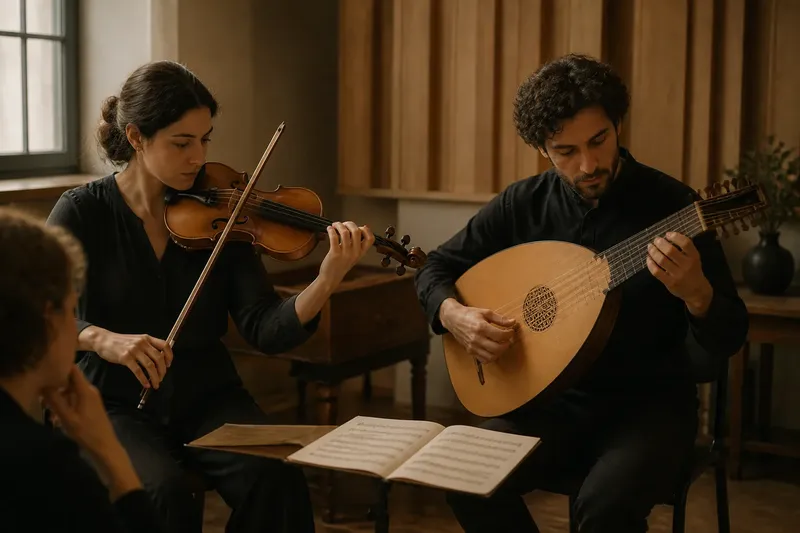
In an imagined concert scene, say you hear a short melody played plainly on a plucked instrument, with a gentle rise at the end. Later, a bowed instrument takes it up in quicker notes, while a lower part adds a tense harmony. You recognize the rise, but the new pacing and support make the tune sound unsettled. If the original version returns near the close, it may seem changed by what came between—not because its notes have to be different, but because your memory of the intervening music has altered its meaning.
What should you listen for?
How do I recognize the theme?
Listen for a memorable contour, rhythmic shape, or point of arrival rather than expecting every note to recur. A theme may be hidden in a supporting part or decorated so freely that its outline is clearer than its exact pitches.
Does every variation need to sound very different?
No. Some variations make a small change in rhythm or accompaniment, letting the contrast gather over time. A modest shift can matter if it changes the tune’s mood or sense of direction.
Why can the same melody feel sad or lively?
Its pace, register, harmony, articulation, and instrumental color all influence its character. A tune’s contour may remain familiar while those surrounding choices change how its gestures land.
What if I lose track of the tune?
Follow one feature that seems stable, such as the melody’s rise, a recurring cadence, or a repeated rhythmic figure. You do not need to identify every variation; hearing one continuing thread is enough to follow the larger design.
Listening without a score
You can hear variation form without knowing the name of the tune or reading notation. First notice the theme’s broad shape: where it rises, where it pauses, and how it comes to rest. When it returns, compare one feature at a time. Has the pulse tightened? Has an instrument taken over? Does the ending arrive with more certainty or less?
Try not to turn listening into a hunt for every altered note. That level of detail can distract from the larger movement. It is not worth the effort to label each ornament or guess which chord is playing unless you enjoy that kind of close analysis. A few clear observations will often reveal the form’s main arc.
It can help to keep a simple mental map: plain statement, quicker version, more elaborate return, quiet close. That is not a rule composers must follow; it is a listening aid. Some pieces avoid a final return, and some make the theme difficult to recognize for a while. In those cases, changes in rhythm, texture, or mood may still help you sense how the passage relates to what came before.
When change becomes the story
Variation turns a musical theme into something more than a recurring object. Each version inherits the listener’s memory of earlier ones, so small changes can carry a sense of consequence. The melody does not need words to suggest an idea reconsidered, a mood unsettled, or a thought gradually made clear.
That is why a repeated tune can feel like development rather than duplication. As you listen to variation form, hold onto one recognizable feature and notice what the music does around it. The changing details are not a distraction from the theme; they are how the theme tells its story.