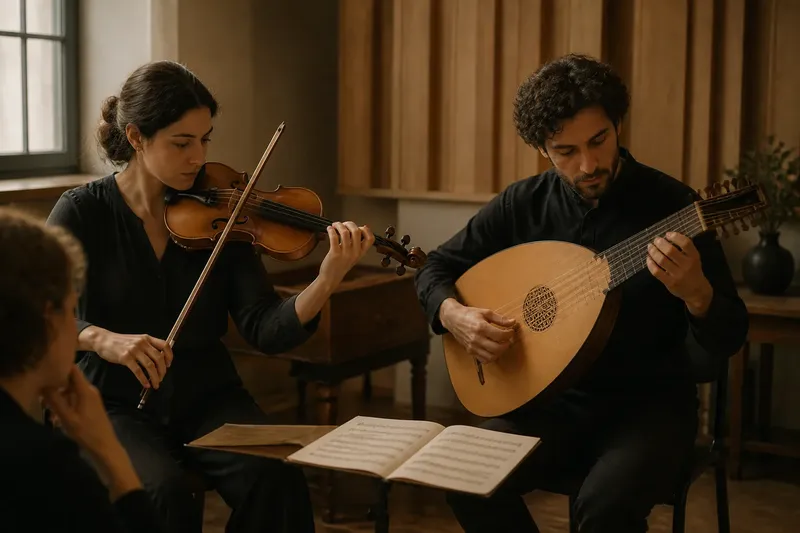
Concert Music in Courtly Rooms and Public Halls
Concert music in public halls reshapes how performers and listeners meet. Learn how venue, access, and etiquette affect a performance without erasing local ties.
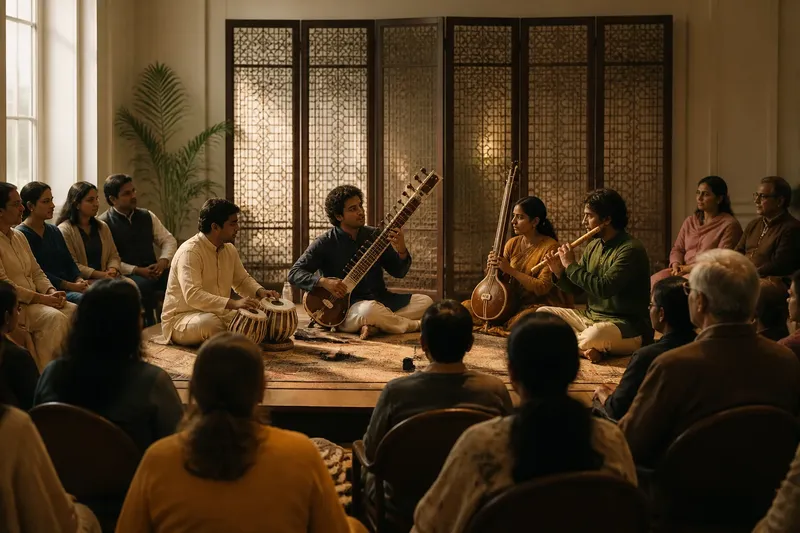
Concert music in public halls changes the relationship between performers and listeners: a raised stage and rows of seats invite a different kind of attention than a household gathering. In eighteenth-century London, for example, ticketed concerts offered a public alternative to music heard in aristocratic homes, though admission still depended on money, location, and social custom. That history is specific to one place and period, not a template for every eastern musical tradition.
Across eastern regions, performance settings have their own histories, from court and temple spaces to civic halls and theaters. Rather than treating them as stages in one universal transition, it helps to ask who organized each event, who could attend, and what listeners were expected to do.
Rooms and audiences
A courtly performance could be part of a larger occasion, such as a reception or ceremony. Musicians might play for a ruler, household members, or invited guests, with the room’s social relationships shaping who listened and how closely. The gathering did not necessarily require everyone to sit silently and face the performers.
A public hall usually gathers people specifically for a performance. A platform or designated area separates the musicians from the seats, while the audience shares a space with people it may not know. That arrangement can focus attention, but it also makes the venue’s customs part of the experience.
Neither setting tells the whole story. A hall can be formal or welcoming; a private room can be intimate or highly restricted. The useful question is what a particular room makes possible: quiet listening, visible exchange between musicians, audience response, or conversation after a piece.
Patronage and access
Private patronage could sustain skilled musicians and demanding repertory, but access often depended on invitation, household ties, or status. Public performance created other routes to an audience, such as admission to a civic event or a ticketed concert, without automatically making the event open to everyone.
The word “public” describes how an event is presented, not who can comfortably enter it. Cost, location, unfamiliar etiquette, and a sense that a venue is meant for someone else can all shape access. Organizers can make those conditions clearer by explaining admission, layout, and customary audience responses in advance.
Moving a performance into a hall does not require musicians to abandon local forms. They may need to adjust how listeners encounter the work: for instance, by introducing an instrument, clarifying when a response is welcome, or choosing seating that makes ensemble exchanges visible. Those choices help orient newcomers without implying that one audience understands the tradition better than another.
Say a community ensemble usually performs in a courtyard and is invited to a civic hall. The musicians keep their repertory, arrange chairs in a semicircle, and briefly explain a response pattern before beginning. New listeners can then follow when to respond, while regular listeners still hear familiar music in a different setting. The tradeoff is that a short explanation may clarify the event but cannot reproduce the courtyard’s social ties.
Sound and sightlines
A room affects what listeners hear. In a compact chamber, quiet details may carry easily to nearby seats. In a large hall, sound can feel more distant, or linger in ways that soften musical detail. Musicians and organizers can respond with performer placement, pacing, repertory, or suitable amplification.
Seating also shapes what listeners see. Musicians placed among guests may be part of the gathering; a defined platform puts them on display and gives the audience a forward-facing view. That can help listeners follow gestures, but it changes the social feel of the event.
For organizers, flexible seating and a clear welcome can help the room support the intended relationship. Ask musicians whether they need a circle for visual exchange, an open aisle for movement, or space for listeners to respond. Do not impose a standard concert layout before understanding the performance’s needs.
Concert halls and etiquette?
Did public halls replace court performances?
No single transition replaced every private setting. Courtly, domestic, religious, and public performances have served different listeners and occasions, sometimes alongside one another.
Did public concerts make music more accessible?
They created new ways to attend, but access still depended on admission, location, social expectations, and whether people felt welcome. A public event is not necessarily an open door.
Why does concert etiquette vary?
Listeners draw on the customs of a venue and the expectations of a particular performance. A hall may encourage quiet attention, while another setting welcomes movement or audible responses.
Can a hall feel intimate?
Seating close to performers, visible communication, and room for exchange can help listeners feel connected. The outcome depends on the event and layout, not just the building’s name.
Reading the venue
Before attending, check the event description and seating plan. A raised stage, a circular arrangement, or performers placed among the seats each suggests a different relationship between audience and musicians. Look for guidance about responses, movement, or listening etiquette, and follow the event’s stated customs rather than assuming every concert works alike.
Organizers can use a short practical checklist when planning a performance:
- Check whether musicians need to see one another; if sightlines are blocked, then arrange chairs in a circle or semicircle instead of keeping straight rows.
- Check whether the performance includes movement; if performers need an open route, then leave a clear aisle, otherwise use the space for closer seating.
- Check whether listeners are expected to respond; if responses are welcome, then explain when they fit, otherwise ask the host to invite quiet attention.
- Check whether the room makes speech or soft sounds hard to hear; if details are lost, then ask musicians about placement or suitable amplification, otherwise keep the setup simple.
- Check whether newcomers may be unsure how to enter or participate; if the event has specific customs, then state them in the welcome, otherwise avoid adding unnecessary instructions.
- Check whether the seating plan suits the event’s social purpose; if it creates unwanted distance, then move seats closer, otherwise keep the layout that best supports the performance.
It is not worth adding ornate decoration or elaborate etiquette just to imitate an imagined courtly past. A thoughtful layout and clear welcome usually do more to show listeners how they fit into the event.
Venue and meaning
Concert music in public halls makes the venue part of the performance’s social history, not a neutral container. A hall can gather listeners beyond a household, while still setting limits through its admission rules, layout, and customs. A private room can support close artistic relationships without necessarily being accessible to outsiders.
When you attend or organize a concert, ask who arranged it, who could enter, and what the room invites listeners to do. Those questions help explain why the same music can feel different in a courtyard, a household room, or a public hall.