How to Listen to a Long Concert Piece Without Losing Its Shape
A first listening plan for a long concert piece helps you stay engaged, recognize shifts in texture, and enjoy unfamiliar music without studying a score.
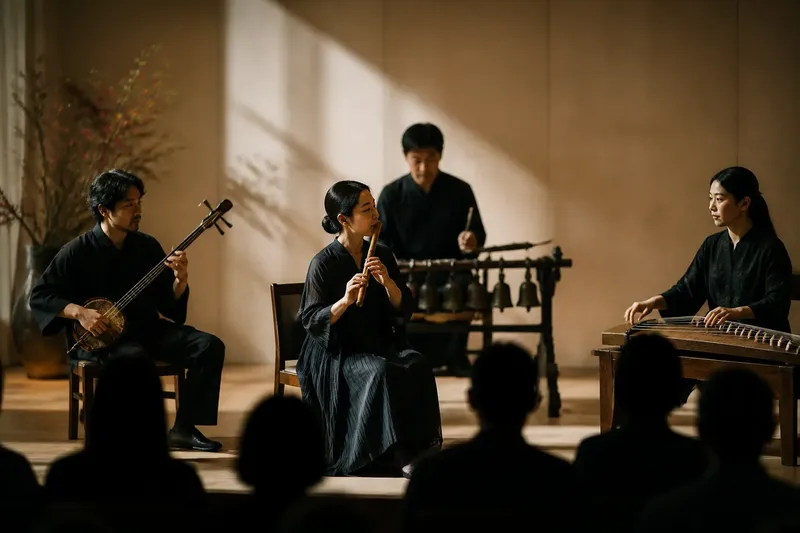
A first listening plan for a long concert piece can start with the room, not the score: notice how the ensemble enters, where the sound gathers, and when the energy shifts. You do not need to identify every instrument to hear how the performance takes shape.
For music that uses unfamiliar instruments or traditions, naming each sound can become a distraction. Instead, choose a listening route based on how the ensemble organizes its performance: its entrances, its spacing, or the way players respond to one another. These cues keep attention on the music’s unfolding rather than on a hunt for labels.
Follow the entrances
Listen for who begins, who joins, and whether the ensemble enters together or in stages. In a large group, the first sound may come from a solo player, a small section, or the whole ensemble. Later entries can change the balance and direction without announcing a formal boundary.
Try noticing whether a player’s gesture seems to invite an answer from another part of the group. You need not know the names of the instruments. “One voice calls; another answers” is enough to follow a musical exchange.
Hear the spacing
Pay attention to how much room the performers leave between sounds. A phrase may end and leave a clear pause, or one part may continue while another rests. The same hall can make a sparse passage feel intimate and a crowded texture feel especially full.
Audience customs vary by venue and performance tradition, so follow the room’s cues rather than assuming every pause invites applause. If the players remain poised or the music resumes without a clear break, wait with the audience. That small act of attention lets the performers shape the transition on their terms.
Notice the exchanges
Some concert music is easier to follow as a set of interactions than as a sequence of themes. Listen for a solo line answered by the group, a steady layer supporting a more flexible one, or a phrase passed from one player to another. These relationships can be heard even when the musical language is new.
Keep the description plain. You might think, “The low part holds steady while the higher part moves,” then notice whether that balance continues or changes. Avoid assigning a story or emotion unless the music itself or the program gives you a reason to do so.
Prepare without overloading
Before the concert, read the program’s title and any brief note that explains the ensemble or the performance setting. If it names instruments, use the list as a set of possibilities, not a quiz. A glance at the stage can also help you connect a sound with a player, but there is no need to keep checking visually.
What is not worth the effort is trying to memorize every instrument name or track every entrance. You will hear more if you let a few clear relationships stand out, then return to the sound after your attention wanders.
Choose a listening route?
Should I follow one instrument?
Follow a player only if the sound is easy to pick out and remains clear in the texture. If it blends into the ensemble, shift to noticing who enters or answers next.
What if the ensemble has unfamiliar instruments?
Describe the sound by its quality, such as breathy, metallic, or low and resonant, rather than guessing its name. Then listen for how that sound relates to the other players.
How can I tell when a section ends?
Notice a pause, a change in who is playing, or a shift in the ensemble’s energy. If no clear break appears, simply stay with the next entrance instead of forcing a formal label.
When should I read the program note?
A short note before the performance can clarify the setting or name the performers. If you prefer to hear the piece first, read it afterward and compare the context with what you noticed.
A worked listening route
Imagine you attend an unfamiliar concert featuring a small ensemble, and the program names several instruments you do not recognize. At the opening, you hear one player begin alone; another joins after a short pause. You decide to follow entrances rather than identify the instruments. Later, the first player falls silent while the second continues, so you shift attention to the spacing and hear a brief gap before the full group enters. Your resulting impression is specific but modest: the performance moved from a solo opening to an exchange, then to a fuller ensemble sound. You have followed its shape without claiming to know every instrument or formal section.
Questions about listening?
Do I need a score to follow the form?
No. Entrances, pauses, and changes in ensemble balance offer audible landmarks. A score can add detail, but it is not required to notice those relationships.
Should I watch the performers?
Watching can help connect an entrance with a player, especially in an unfamiliar ensemble. If keeping your eyes on the stage pulls attention away from the sound, listen with your eyes relaxed or closed.
What should I do if I lose track?
Return to the next clear sound, entrance, or pause. There is no need to reconstruct the part you missed.
Can I change my listening route?
Yes. If you cannot follow a particular player, switch to spacing or exchanges between performers. The route is a support for attention, not a task to complete.
Keep the frame flexible
A first listening plan for a long concert piece is most useful when it tracks the ensemble’s shared activity rather than demanding a running inventory. Follow entrances, hear the spacing, or notice exchanges, then let the music surprise you. If a program note names a tradition or instrument you did not recognize, look it up afterward; the name may add context to an impression you already heard.